Can AI Replace Graphic Designers? The Real Truth
AI & DESIGNING
Pallabi Das
2/26/20265 min read
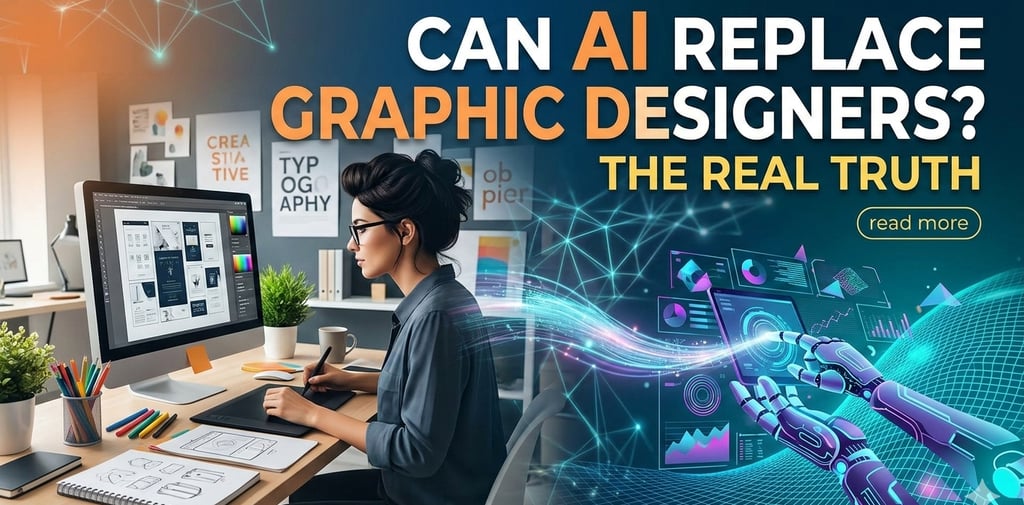
AI is changing industries at an amazing rate. Automation tools are changing the way people do their jobs, from writing content and coding to editing videos and helping customers. AI-powered design tools like Canva AI, Adobe Firefly, Midjourney, and DALL·E are making it possible to make logos, posters, graphics for social media, and even brand kits in just a few seconds.
This quick change makes a big question come up:
Is it possible for AI to take the place of graphic designers?
No, but the long answer is more complicated. AI is changing the way graphic design is done, but it won't get rid of designers. It's not changing their role; it's changing it. This blog will show you the real story behind AI and graphic design, cutting through the hype.
Knowing What AI Can Do for Graphic Design
Let's first figure out what AI does well before we decide if it can replace designers.
1. Quickness and automation
AI tools can make:
Posts on social media
Ideas for logos
Layouts for websites
Palettes of colors
Removing the background
Improvements to images
Things that used to take hours can now be done in minutes.
2. Design with Templates
AI loves patterns. It looks at thousands of existing designs and makes new ones based on what it learns. AI is very good at doing the same design work over and over again.
3. Suggestions Based on Data
AI can suggest:
Fonts that fit the brand's tone
Different colors together
Changes to the layout
Ad creatives that are best for getting people to interact
This is a game changer for marketers and small businesses.
What AI Can't Do (At Least Not Yet)
AI is very powerful, but it has a lot of problems.
1. It doesn't have emotional intelligence
Design isn't just about how things look. It's about feelings, stories, psychology, and understanding other cultures.
A designer who is human knows:
What hurts the audience
The personality of the brand
Being aware of other cultures
Triggers for emotions
AI makes patterns, but people give them meaning.
2. It Can't Plan Ahead
Good design helps a business reach its goals. A designer thinks about:
Positioning a brand
The journey of the customer
Funnel for marketing
The competitive landscape
AI doesn't get long-term brand strategy unless you tell it exactly what to do, and even then, it doesn't really understand.
3. Creativity that is original is limited
AI makes things based on data that is already there. It puts patterns back together, but it doesn't make things up from real life. People's imagination, experimentation, and willingness to take risks often lead to truly groundbreaking design.
The Real Effect of AI on Graphic Designers
What we're seeing is not replacement, but change.
AI: A Tool, Not a Replacement
Graphic designers now use AI to:
Come up with initial ideas
Make brainstorming go faster
Make tasks that happen over and over again automatic
Make work more productive
This lets designers spend more time on:
Direction for creativity
Plan
Storytelling for brands
Talking to clients
The designer's job is changing from doing things to coming up with ideas and overseeing them.
Who Is Most Likely to Get Hurt?
Not all design jobs are affected in the same way.
1. Designers who are just starting out or who use templates
Designers who only use:
Simple Canva templates
Easy posts on social media
Logo makers
Repeated banner ads
might feel pressure from AI tools.
Why? AI is great at doing the same thing over and over again.
2. Strategic Designers Are Safer
Designers who:
Create brand identities
Make systems for design
Learn about the psychology of UX and UI
Work closely with the marketing teams
are much less likely to be replaced.
The greater the strategic value, the lesser the risk.
AI vs. Graphic Designer: A Direct Comparison
AspectAIHuman DesignerSpeedVery fastModerateCreativityPattern-basedEmotional & originalStrategyLimitedHighClient CommunicationNoneStrongAdaptabilityDriven by dataCulturally sensitive, risky, and aware of the situation
AI is faster and more automated. People win when it comes to strategy and emotional intelligence.
The Future: Working Together Instead of Competing
AI and designers working together, not AI replacing designers, is the real future.
Think about how:
Photoshop didn't take the place of designers.
Canva didn't get rid of agencies.
Photography didn't die because of stock photos.
Technology changes the industry, but it doesn't often get rid of all creative professionals.
Designers who use AI will:
Finish projects more quickly
Give more services
Encourage more creative experimentation
Make more money
People who don't want to change may have a hard time.
Why Clients Still Need Graphic Designers
Companies still hire designers, even though they can use AI tools. Why?
1. A brand's identity needs depth
A logo is more than just a picture. It stands for:
Mission
Vision
Values
Who the audience is
AI can make a logo, but it can't really understand your brand story without a person explaining it.
2. More than just templates for customization
AI tools often make designs that look "similar" to other designs. A professional designer makes sure that everything is unique and consistent across all platforms.
3. The ability to solve problems
A lot of the time, clients don't know what they want. A designer helps:
Ask the right questions
Improve ideas
Fix problems with communication
AI can't take the place of brainstorming with other people.
The Psychological Aspect of Fear
People have been afraid that AI will take their jobs for a long time. Machines took the place of people doing work by hand during the Industrial Revolution. Typewriters were replaced by computers later. But new jobs came up.
The same thing is happening now.
AI isn't taking away creativity; it's making execution easier.
Graphic designers who change into:
Strategists who are creative
Brand experts
People who think about UX
People who tell stories with pictures
will still be very useful.
How to Keep Graphic Designers Up to Date
If you're a designer who is worried about AI, here are some things you can do:
1. Get to know AI tools
Don't be afraid of AI; learn how to use it. Some tools you can use are:
Adobe Firefly
Midjourney
Canva AI
Figma AI add-ons
This helps you get faster and more competitive.
2. Pay attention to strategy
Get better at:
Branding
Psychology of marketing
Behavior of consumers
Telling stories
You can't find anyone else like a strategic thinker.
3. Make your own style
AI makes outputs that are not specific. Designers who have a style that people can recognize add more value to a brand.
4. Improve your ability to communicate
People are good at talking to clients, giving presentations, negotiating, and understanding briefs. Make them better.
5. Get into UX/UI
Research, empathy, and testing are all important parts of user experience design, and human insight is still very important in these areas.
Will designers ever be completely replaced by AI?
In theory, AI could get better. But design is very human. It links culture, feelings, psychology, and the situation.
Even if AI gets smarter:
Companies will still need people to watch over them.
Real voices will be needed for brand storytelling.
Ethical issues will require human judgment.
It is not likely that there will be a full replacement.
Change? Of course.
The Real Story
AI is not a threat to graphic designers.
AI is:
A way to get more done
An assistant for creative people
A partner for brainstorming
An accelerator for design
Designers who change will do well. People who only have basic technical skills might have a hard time.
People who use technology and human insight to come up with new ideas will shape the future.
Last Thoughts
So, is it possible for AI to take the place of graphic designers?
Not really, but it can take the place of designers who don't want to change.
More and more people in the creative industry are becoming hybrid professionals who know both design and technology. AI will take care of boring tasks, leaving designers free to use their imaginations, tell stories, make plans, and connect with people on an emotional level.
AI doesn't make people less creative; it pushes designers to get better.
And that's not a threat.
That's a chance.