Graphic Design Trends That Will Dominate 2026
GRAPHIC DESIGN
Pallabi Das
2/23/20266 min read
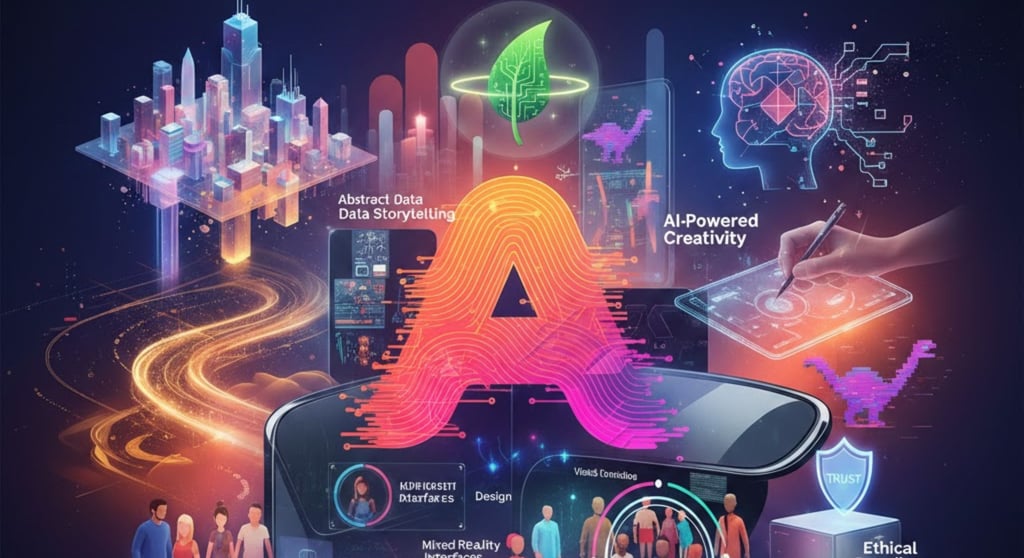
Visual communication is changing faster than ever before. In 2026, graphic design will be more than just making things look good. It will also be about having deep conversations, making emotional connections, being open to everyone, and coming up with new ideas. This is because technology, culture, and the way people shop are always changing. These are the biggest graphic design trends that will be popular in 2026. They include new versions of old styles and digital experiences that make you feel like you're there.
1. Immersive 3D Worlds: Why It Matters More Than Just a Screen
3D graphics are already becoming more common, and soon they will be standard. Designers are moving away from flat interfaces and into fully immersive 3D spaces that can be accessed online, on mobile devices, and in augmented reality (AR). This is possible because rendering technology has improved and 3D tools can now be used in web browsers.
What Will Happen in 2026
Web-based 3D Experiences: Websites that use 3D navigation instead of the usual scroll-and-click will make brands feel more like places than pages.
Product Visualization: Instead of still photos of products, e-commerce will use a lot of interactive 3D models that can rotate, zoom, and move around.
Digital showrooms, interactive portfolios, and experiential landing pages are examples of virtual brand spaces that will change how people interact with brands.
What Designers Need to Know
To learn, you will need to use programs like Blender, Three.js, and Adobe Substance. They won't be optional any longer. Designers shouldn't just think about how to make a space look good; they should also think about how to tell stories through how it looks and works.
2. AI-powered creativity: adding to, not taking away
The AI Revolution Is Still Happening
AI is now a partner in creativity. People won't be afraid of AI in 2026; instead, it will be carefully added to the design process. AI will help designers do the same things over and over again so they can come up with new ideas and make plans. This includes coming up with ideas, making things, and making prototypes quickly.
How AI Will Change the Way Things Are Made
Smart Ideation Tools: Ideas that help you quickly pick colors, layouts, and mood boards.
Automated accessibility checks are tools that automatically check to see if something follows the rules for inclusive design, readability, and contrast ratios.
People helped make AI-made things like backgrounds, drawings, and animations.
Important Note
AI tools are there to help you, not to do everything for you. In the future, designers will work with machines to make new things instead of just copying what they see.
3. Sensory Typography: It's Not Just Words
Fonts Make You Feel
There has always been a tone to typography, but in 2026 it will have a sensory quality. Type will do more than just give information for designers. It will also set the mood, create rhythm, and get people to interact.
Changes that matter
Kinetic Fonts: Fonts that move when you scroll, move the cursor, or make noise.
Variable Font Play: Fonts that change their weight, style, and shape as you type.
Letterforms that are expressive: type that changes shape, interacts with you, and makes you feel things.
Why It Is So Popular
Designers use type to tell stories and get people interested, not just to make things easier to read in a world full of screens.
4. Sustainable Design: Making things with the environment in mind
A visual identity that is good for the environment
Sustainability isn't just a small problem; every brand needs to think about it. Designers will use more and more eco-friendly ideas and methods in their work.
What does design that lasts look like?
Eco-Friendly Printing: using materials and methods that don't put as much carbon into the air.
Digital Minimalism is the idea that you should cut down on pictures that use a lot of data to save energy and make things work better.
Symbols of Sustainability: Visual systems that show moral values without making things look better than they are.
Reason
People want things to be true. People will trust and stick with brands that have a style that fits with their environmental values.
5. Mixed Reality Interfaces: The Next UX Frontier
From Screens to Space
As augmented reality (AR) and mixed reality (MR) become more popular, graphic designers will start to work on spatial and experiential design in regular apps and games.
How This Affects Design
Spatial UI/UX: Interfaces that float in space, respond to gestures, and change based on what the user needs.
Web to Reality Bridges: Make it easy to go from flat web experiences to AR interactions.
Environmental Branding: Pictures that look different depending on the light and space around them.
Changes in the skills needed
In addition to color theory and composition, you will also need to learn about depth, audio cues, motion design, and spatial layout.
6. Design that is open to everyone and shows off different cultures
Design That Talks to Everyone
Not only is it the right thing to do to include everyone, but it's also smart. In 2026, brands will compete to see how well their pictures show how different and easy it is to get to the real world.
Big Parts
Adaptive graphics for people with disabilities include high-contrast versions, screen reader improvements, and options that change when you move them.
Visually Aware Designs: Designs that don't copy styles from other places but still honor them.
Multi-Modal Design: pictures that look good, sound good, and feel good.
What it does
In a world where everyone is connected, it's very important for brands to show that they care about their customers by using inclusive design.
7. Abstract Data Storytelling: Where Art, Dreams, and Data Analysis Meet
Data visualization has always been useful, but in 2026 it will be moving. Instead of boring charts and spreadsheets, designers will make stories that help people feel data.
How to Watch
Charts and other artistic things that show what brands are like are examples of illustrative data.
Animated Insights: Pictures that move around to show trends in a way that is always changing.
Interactive Dashboards: Interfaces that let people see data in a way that isn't just a picture on a screen.
Why It's Important
It's easier for people to remember stories than numbers. It will be very helpful to have designers who can turn data into stories.
8. Changes and gradients in bright colors
The Color Renaissance
Over time, colors change. In 2026, look for bright, surprising gradients that are full of emotion, look like they came from the future, and are very expressive.
Expected Color Directions
Hyper-Saturated Palettes: Color schemes that are bright and digital-first.
AI-Generated Harmonies: AI makes color systems that look for patterns.
Emotive Gradients: Colors that change depending on how someone feels or the story behind a brand.
Color Psychology Is Still Important
People will choose colors based on how they make them feel and how they act, whether they are calming or exciting.
9. Nostalgia Reimagined: Giving Old Things a New Look
Looks from the past become new again.
New technology moves design forward, but nostalgia keeps it the same. Designers will look back at styles from the 1980s, 1990s, and early 2000s and mix them with what people like now in 2026.
Real-life examples
The Y2K and Cyberpunk Revival: Neon lights and pixel accents work together in cool ways.
Print Revival Aesthetics: using paper textures, scan lines, and analog distortion on purpose.
Design that isn't perfect: edges that aren't straight, collage styles that are fun, and textures that you can feel.
Why Nostalgia Works
It connects the tastes of people from different generations and makes tech-heavy visual systems feel more like home.
10. Honest Branding: Being Honest in Visual Messaging
Being Honest Is a Design Rule
Pictures will be the only way to tell the truth after that. By 2026, ethical branding, which means making your design look real without fooling people, will give you an edge over your competitors.
How to Use in Real Life
A transparent visual hierarchy is all about being open and honest about the information you share.
Real People, Real Stories, and Real Events Instead of Stock Clichés: Pictures of real people, real stories, and real events.
No extra fees, buttons that are hard to understand, or patterns that make people want to buy something.
What happened
Customers will trust and stick with brands that use design to make things easier to understand instead of trying to trick them.
In conclusion, design that listens and acts
In 2026, design will need to be adaptable, accessible to all, and possess various levels of intelligence. There won't be trends just for the sake of having them. There will be trends that look at how people live, how cultures change, and how new technologies change people's lives.
No matter how long you've been designing or how new you are, these ten trends will keep you on the cutting edge of design in 2026 and beyond.