
How AI is Transforming Digital Marketing in 2026
DIGITAL MARKETING
Pallabi Das
1/6/20264 min read
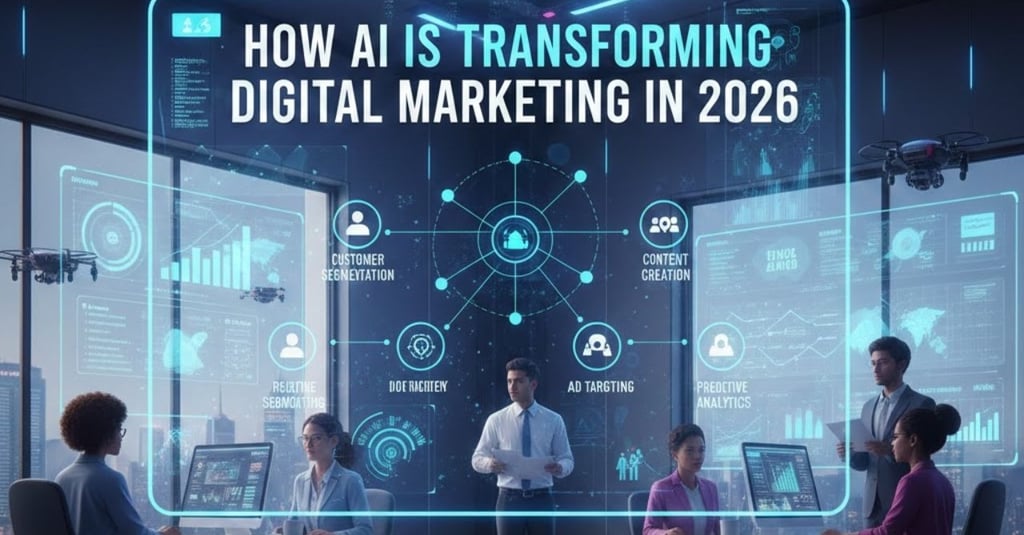
Artificial Intelligence (AI) is no longer a futuristic concept — it is the driving force behind modern digital marketing. In 2026, AI is not just assisting marketers; it is reshaping strategies, automating workflows, enhancing personalization, and redefining customer experiences at scale.
From predictive analytics and hyper-personalized campaigns to AI-powered content creation and smart chatbots, businesses that embrace AI are gaining a massive competitive advantage. Let’s explore how AI is transforming digital marketing in 2026 and what it means for brands moving forward.
1. Hyper-Personalization at Scale
In 2026, generic marketing no longer works. Customers expect personalized experiences tailored to their behavior, preferences, and needs.
AI analyzes massive amounts of user data — browsing patterns, purchase history, engagement behavior, and even real-time interactions — to deliver highly customized content, product recommendations, and advertisements.
How It’s Changing Marketing:
Dynamic website content tailored to each visitor
AI-generated product recommendations
Personalized email campaigns with predictive subject lines
Customized ad creatives based on user interests
AI tools powered by platforms like Google and Meta now optimize ad delivery automatically, ensuring the right message reaches the right audience at the right time.
Result: Higher engagement rates, better customer satisfaction, and improved conversion rates.
2. AI-Driven Content Creation
Content remains king in digital marketing — but AI is becoming the kingmaker.
In 2026, marketers use AI tools to:
Generate blog posts
Write social media captions
Create ad copy
Develop video scripts
Produce AI-generated visuals
AI doesn’t replace creativity; it enhances it. Tools powered by machine learning can analyze trending topics, identify high-performing keywords, and suggest optimized content structures in seconds.
Benefits:
Faster content production
SEO-optimized drafts
Improved content consistency
Data-backed content strategies
However, successful brands combine AI efficiency with human creativity to maintain authenticity and emotional connection.
3. Predictive Analytics and Smarter Decision-Making
One of AI’s most powerful contributions in 2026 is predictive analytics.
AI systems analyze historical data to predict:
Customer lifetime value
Purchase probability
Churn risk
Best-performing content types
Future market trends
Instead of reacting to data after campaigns end, marketers now make proactive decisions based on predictive insights.
For example:
AI can predict which leads are most likely to convert.
It can suggest the best time to send emails.
It identifies which audience segments need retargeting.
This reduces wasted ad spend and maximizes ROI.
4. AI-Powered Chatbots and Conversational Marketing
Customer expectations for instant responses have grown significantly. In 2026, AI chatbots are more intelligent, human-like, and context-aware than ever before.
Modern AI chatbots can:
Handle complex customer queries
Provide personalized recommendations
Schedule appointments
Qualify leads
Complete purchases
Conversational AI improves customer experience by offering 24/7 support without increasing operational costs.
Brands now use AI chat systems across:
Websites
WhatsApp Business
Instagram DMs
Facebook Messenger
E-commerce platforms
Impact: Faster response times, improved user satisfaction, and higher conversion rates.
5. Smarter SEO with AI
Search Engine Optimization has evolved dramatically in 2026. AI tools now analyze search intent more accurately than ever before.
AI assists marketers by:
Identifying keyword clusters
Suggesting content gaps
Optimizing meta tags
Improving internal linking
Monitoring search algorithm updates
Search engines themselves use AI algorithms (like Google’s machine learning models) to understand context and user intent better.
This means marketers must focus on:
High-quality content
User experience
Semantic search optimization
Voice search compatibility
AI-driven SEO tools now provide automated audits and real-time suggestions, helping websites rank faster and more efficiently.
6. Programmatic Advertising and Real-Time Optimization
AI has revolutionized online advertising through programmatic ad buying.
In 2026, AI systems:
Analyze millions of data points in milliseconds
Automatically adjust bids
Optimize ad placements
Test multiple creatives simultaneously
Reduce ad fraud
Instead of manually managing campaigns, marketers rely on AI algorithms to continuously optimize performance in real time.
Platforms like Google Ads and LinkedIn integrate AI bidding strategies that maximize campaign efficiency.
Outcome: Lower cost per acquisition (CPA) and higher return on ad spend (ROAS).
7. Voice and Visual Search Optimization
Voice assistants and visual search technologies have gained mainstream adoption in 2026.
Consumers now search using:
Voice queries via smart devices
Image-based searches
AI-powered visual recognition tools
AI helps marketers optimize content for conversational keywords and long-tail search queries.
Brands now focus on:
FAQ-style content
Structured data markup
Image optimization
Natural language processing (NLP)-friendly content
This shift requires a more human, conversational tone in digital content.
8. Advanced Customer Journey Mapping
AI provides a 360-degree view of customer journeys.
Instead of fragmented data across multiple platforms, AI integrates:
Social media interactions
Website behavior
Email engagement
Purchase history
CRM data
This unified data enables marketers to:
Identify drop-off points
Personalize touchpoints
Automate follow-ups
Improve retention strategies
AI-driven journey mapping ensures smoother customer experiences across all digital channels.
9. AI in Email Marketing
Email marketing remains one of the highest ROI channels — and AI has made it smarter.
In 2026, AI helps:
Predict the best send times
Personalize subject lines
Segment audiences automatically
Create adaptive email content
Analyze engagement patterns
AI systems even adjust content blocks in real time depending on the recipient’s behavior.
Result: Higher open rates, better click-through rates, and improved conversions.
10. Ethical AI and Data Privacy Considerations
As AI becomes more powerful, ethical considerations are more important than ever.
In 2026, consumers demand:
Transparency in data usage
Responsible AI practices
Strong data protection policies
Marketers must balance personalization with privacy compliance.
AI tools are now designed to:
Work with first-party data
Comply with privacy regulations
Provide anonymized insights
Trust has become a major competitive advantage.
Challenges of AI in Digital Marketing
While AI offers incredible opportunities, it also presents challenges:
Over-reliance on automation
Loss of human creativity
Data privacy risks
High implementation costs
Skill gaps within marketing teams
The key is balance — AI should support strategy, not replace strategic thinking.
The Future of AI in Marketing Beyond 2026
Looking ahead, AI will likely become even more integrated into marketing workflows.
We can expect:
Fully automated campaign management
AI-driven brand voice consistency
Real-time sentiment analysis
Advanced emotional AI in advertising
Deeper integration with augmented and virtual reality
The future of digital marketing is intelligent, data-driven, and highly personalized.
Conclusion
In 2026, AI is not just transforming digital marketing — it is redefining it. From hyper-personalization and predictive analytics to automated advertising and conversational AI, technology is empowering brands to deliver smarter, faster, and more meaningful customer experiences.
However, the true power of AI lies in collaboration between human creativity and machine intelligence. Businesses that leverage AI strategically while maintaining authenticity and ethical responsibility will dominate the digital space.
The question is no longer whether to use AI in marketing — but how effectively you can integrate it into your strategy.
AI is not the future of digital marketing.
It is the present.